Fungi
20 January 2026
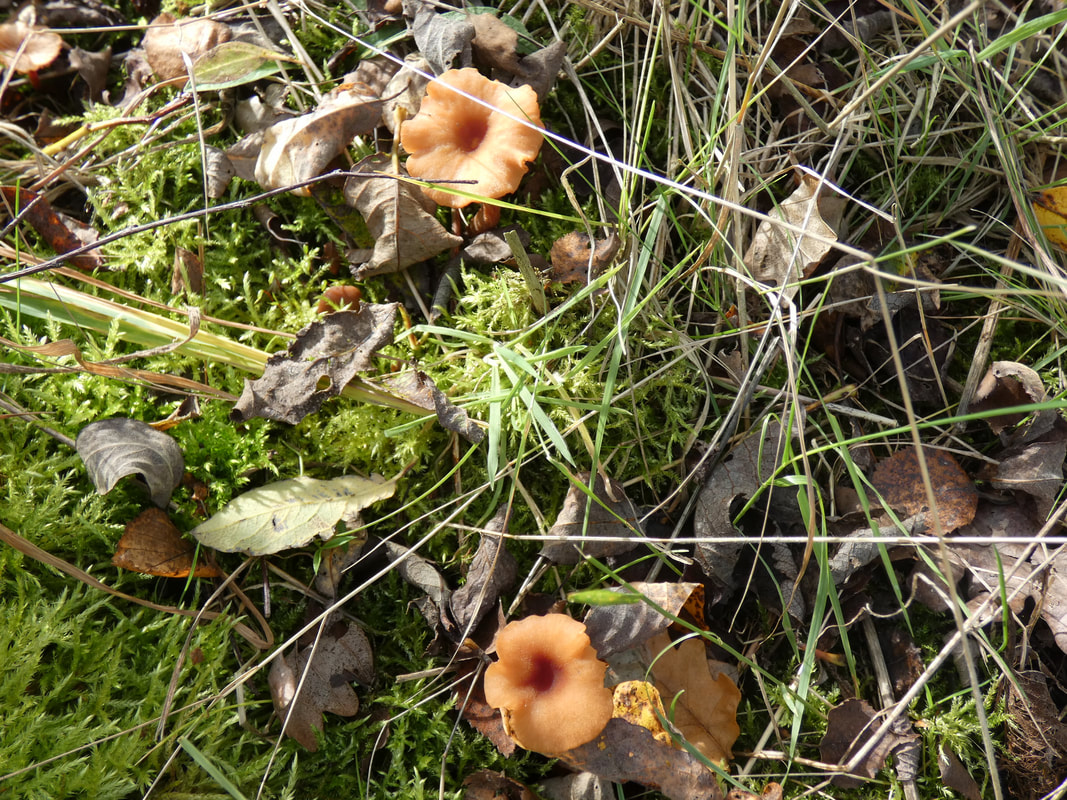
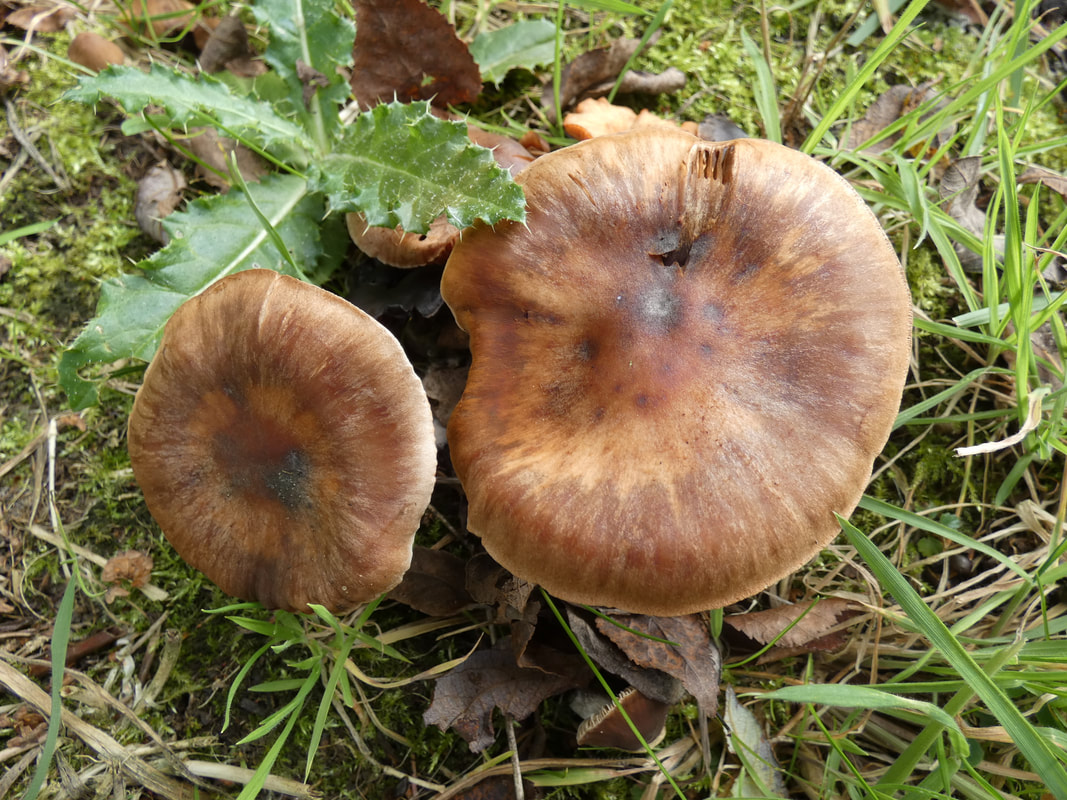
Recent wet and mostly mild weather has allowed particularly wood-dwelling fungi to grow fruiting bodies for spore dispersal. The practice of laying cut branches in piles provides a lot of surface area which also has less latent heat than whole logs so these warm up quickly giving substrate to a number of wood-dwelling saprophytes (organisms that live on decaying matter). We also found one or two less usual species on oak in the older Watt's Wood.
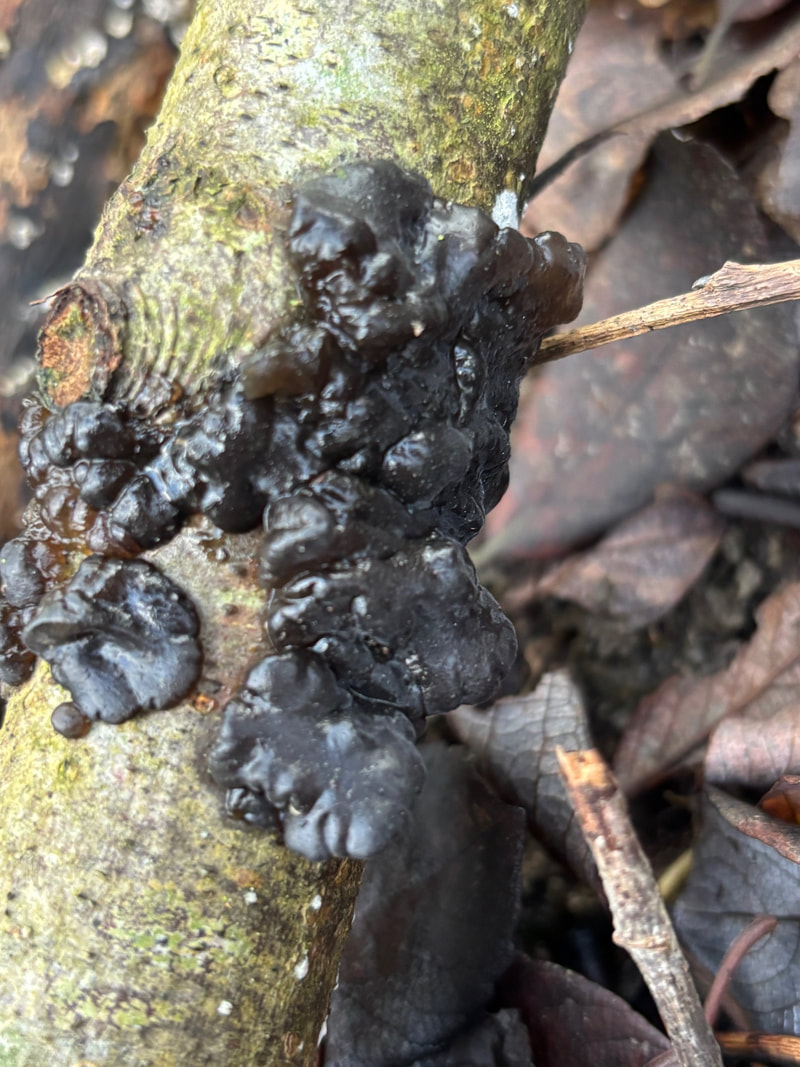
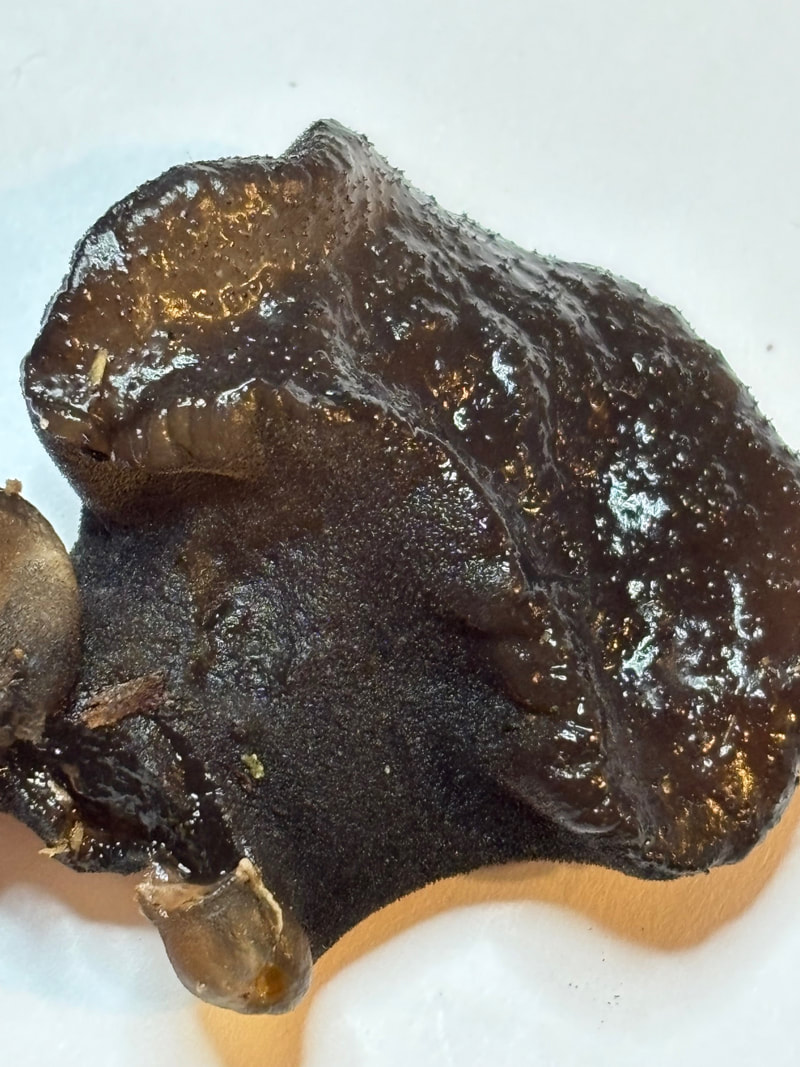
Three prevalent groups on wood, not quite exclusively though.
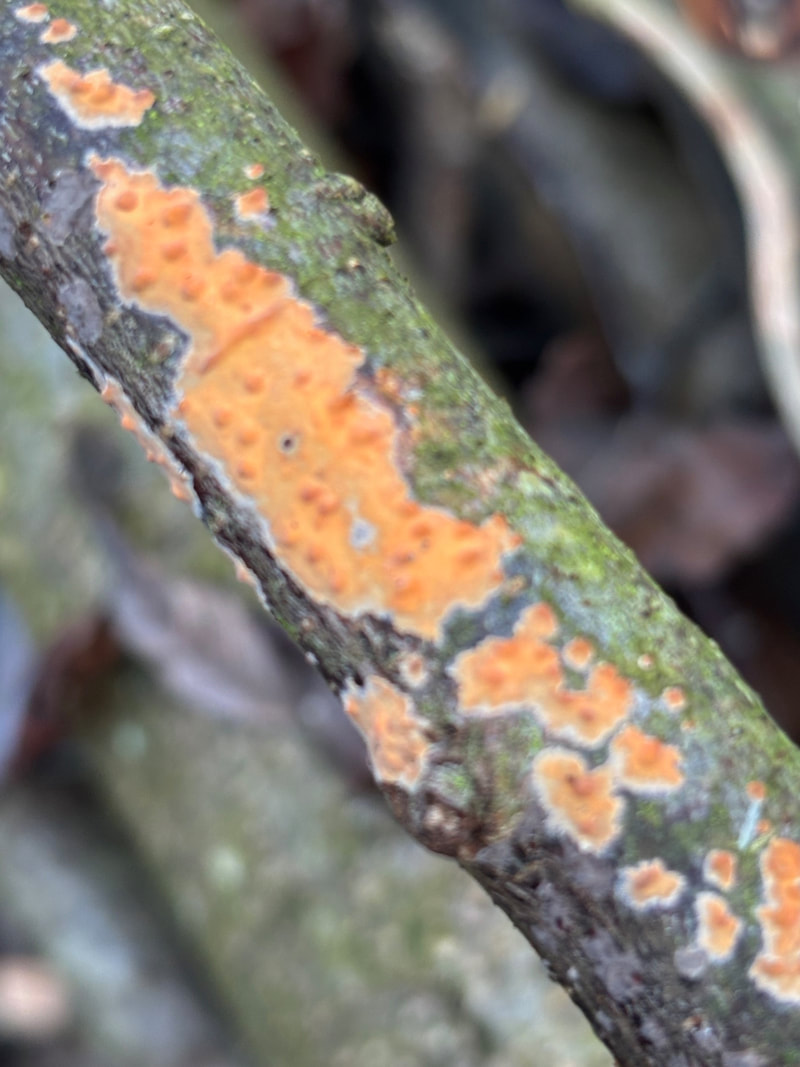
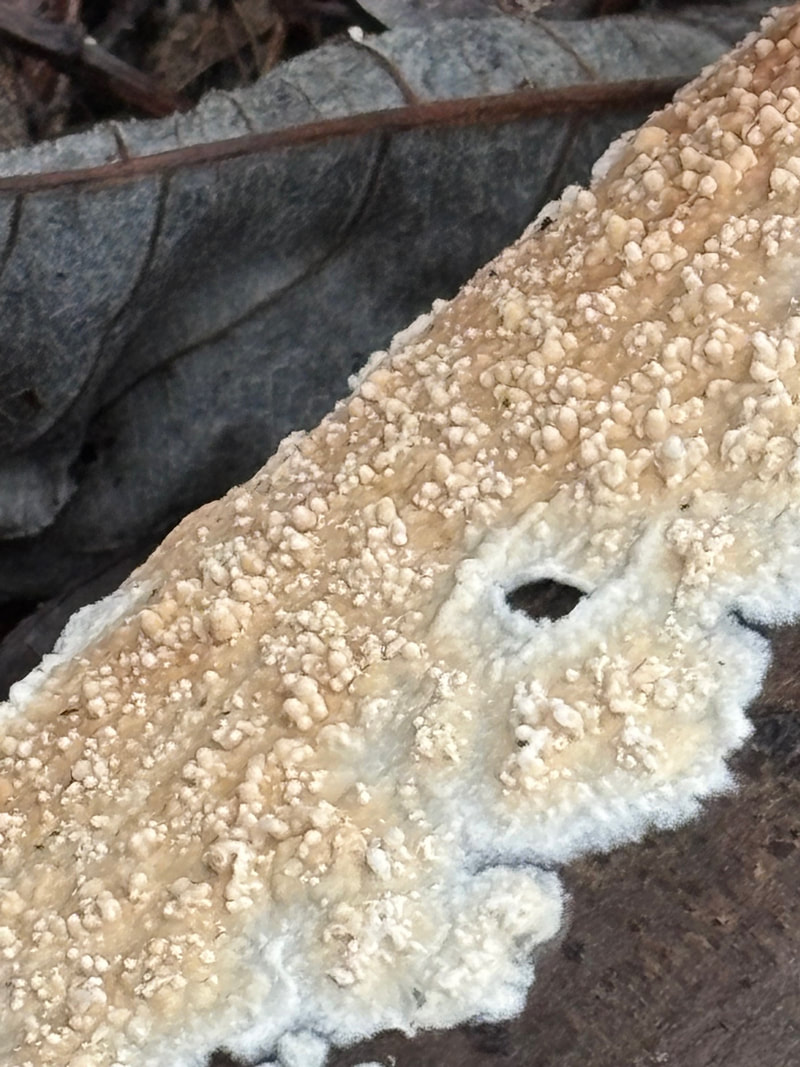
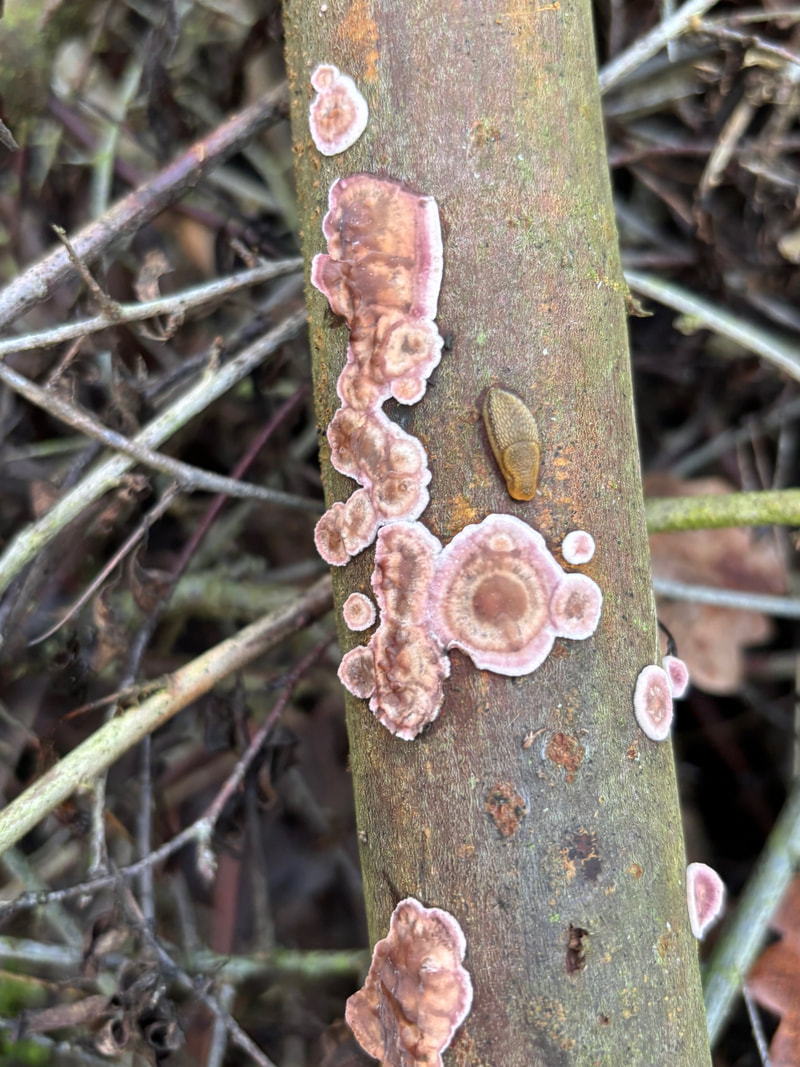
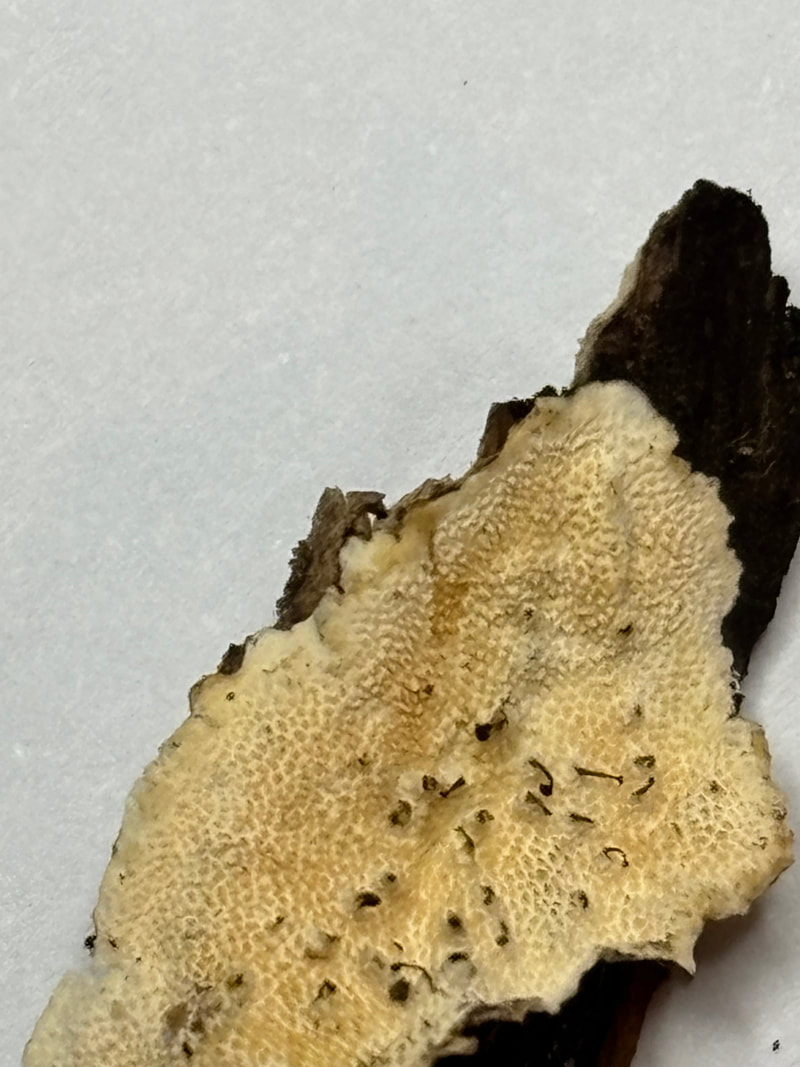
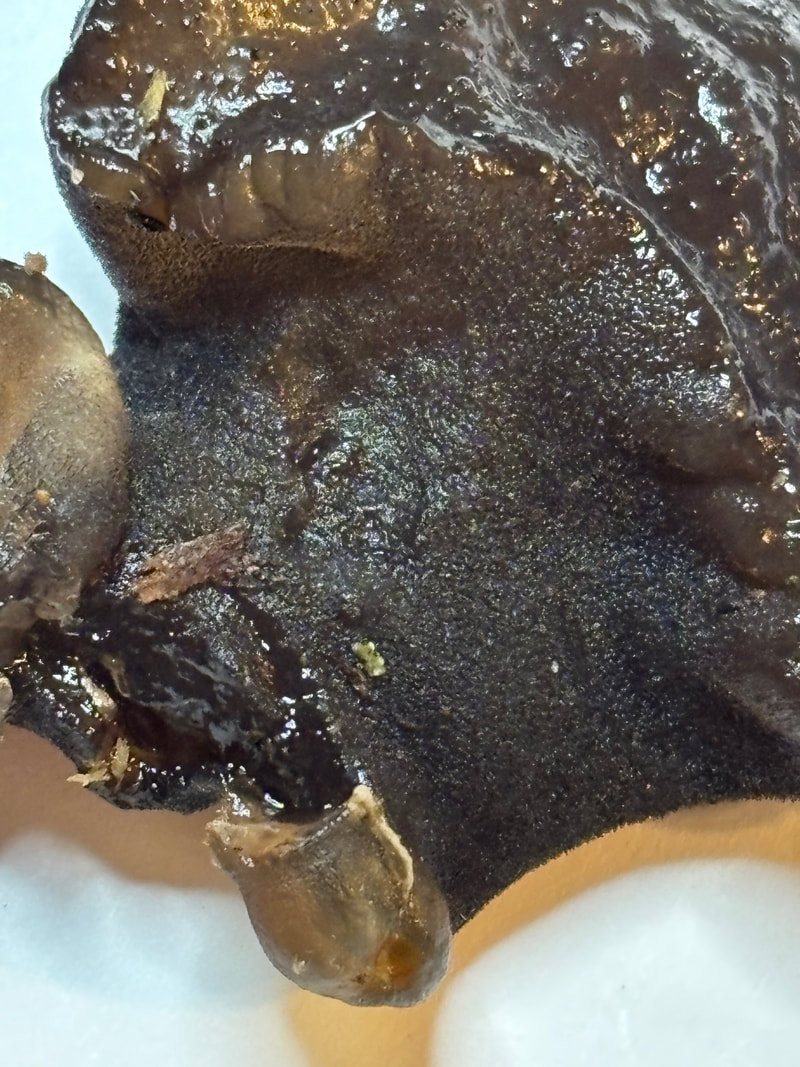
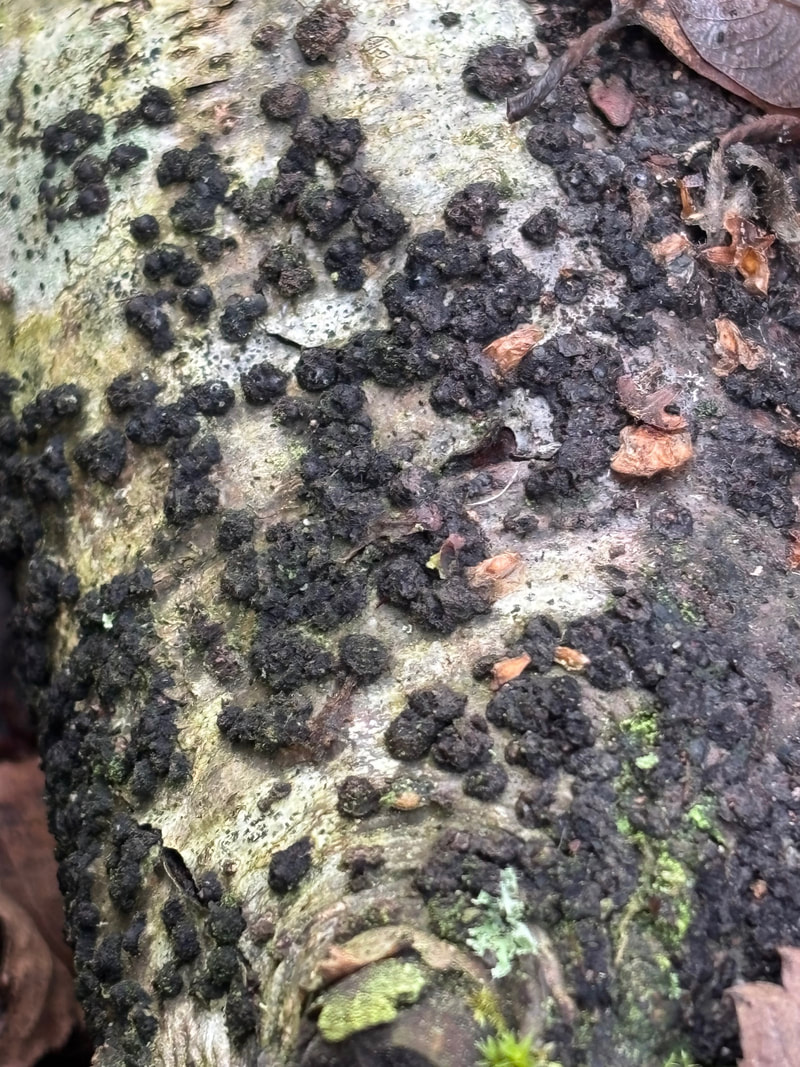
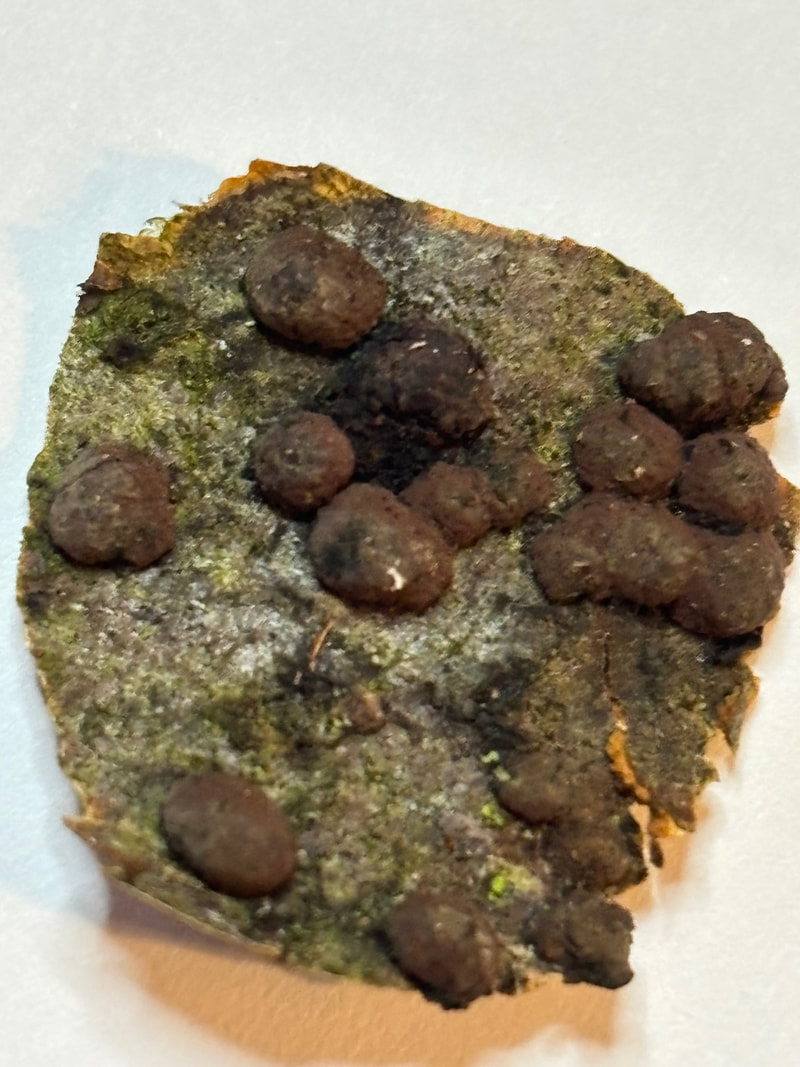
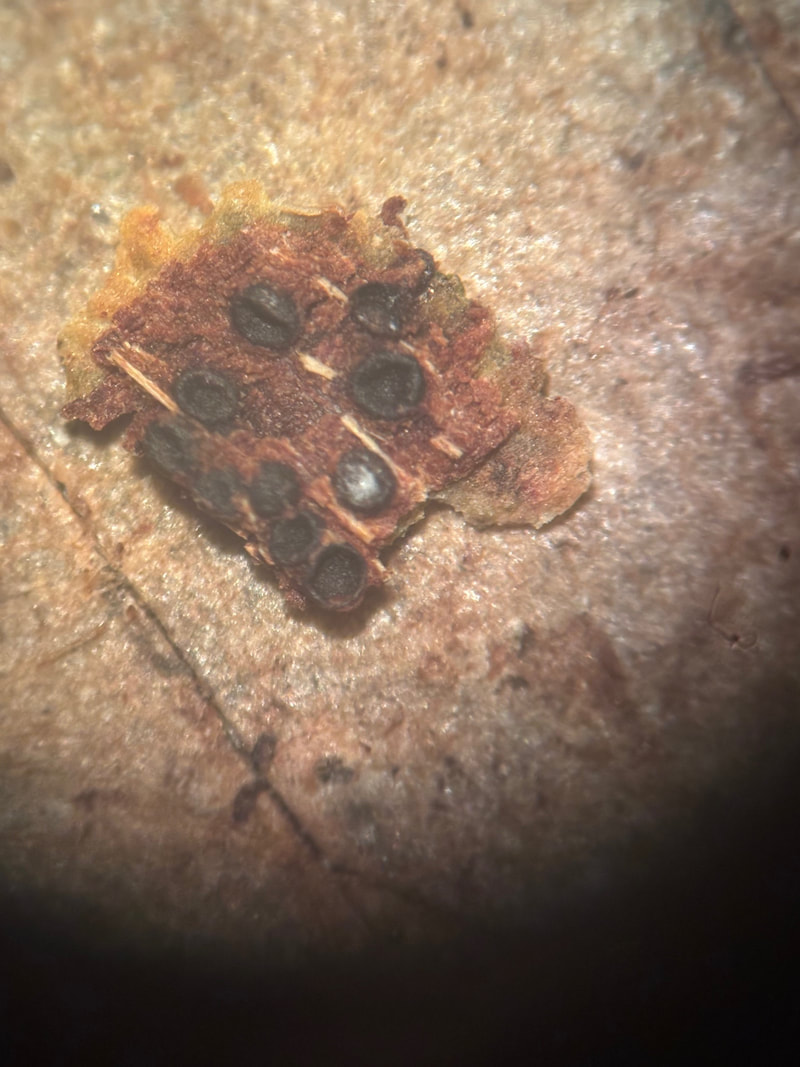
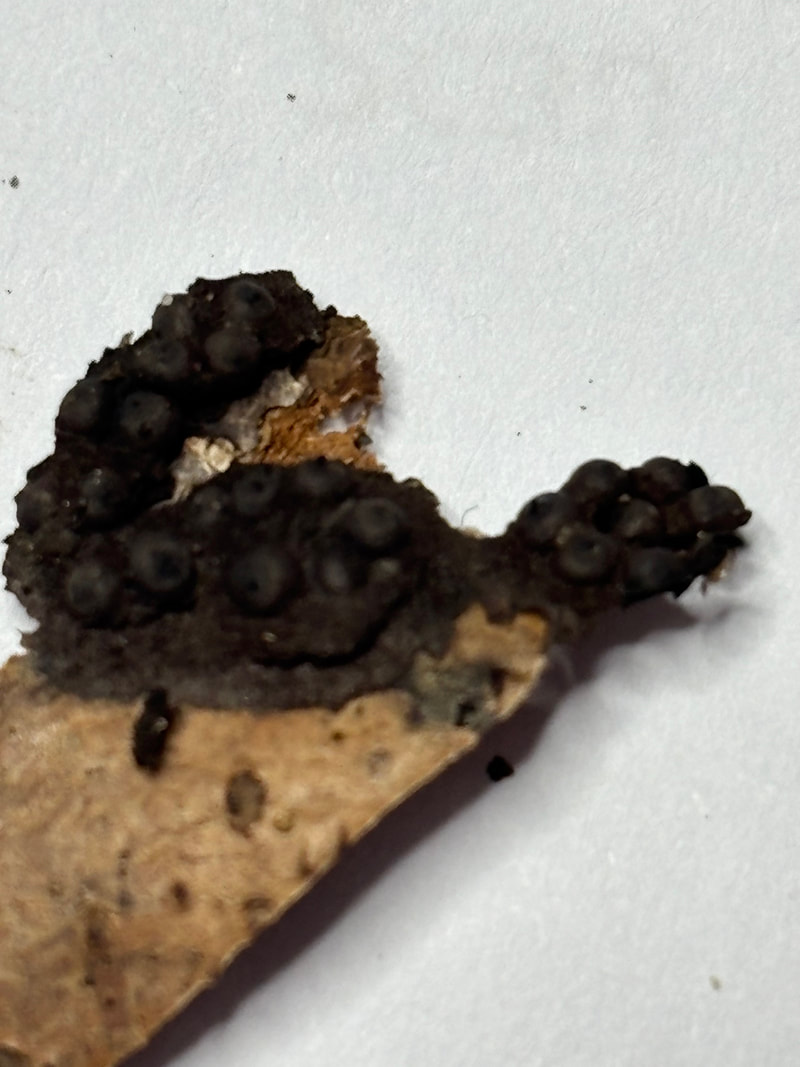
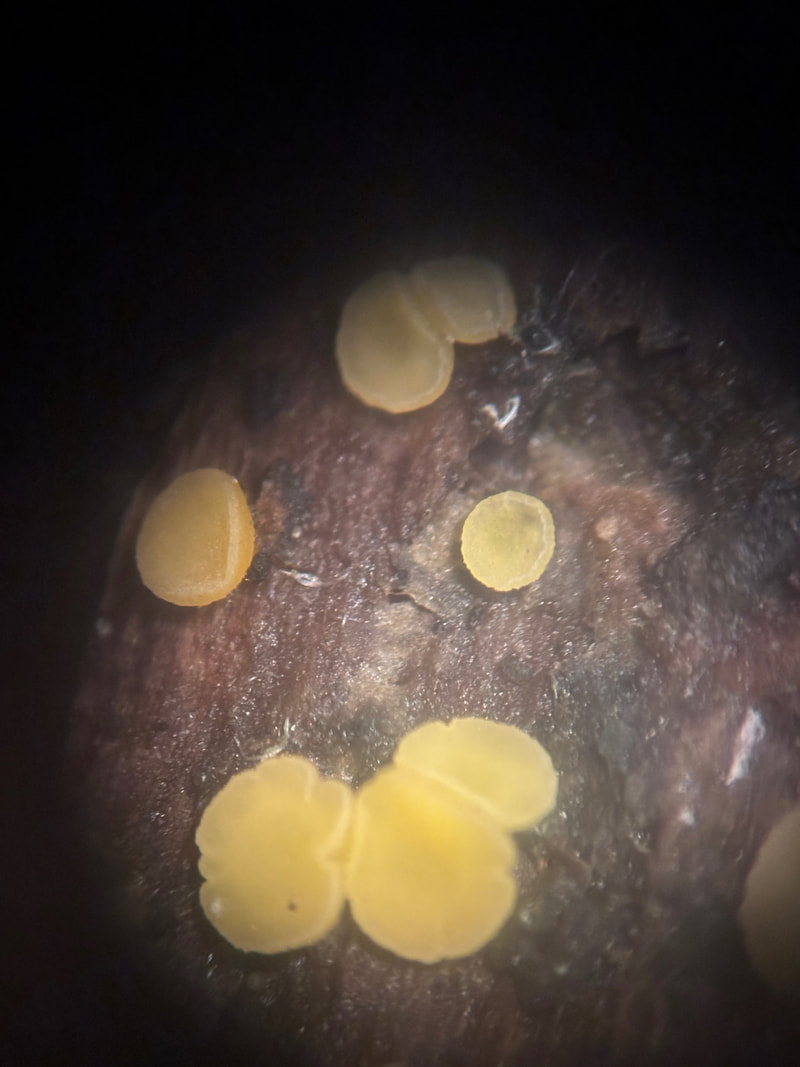
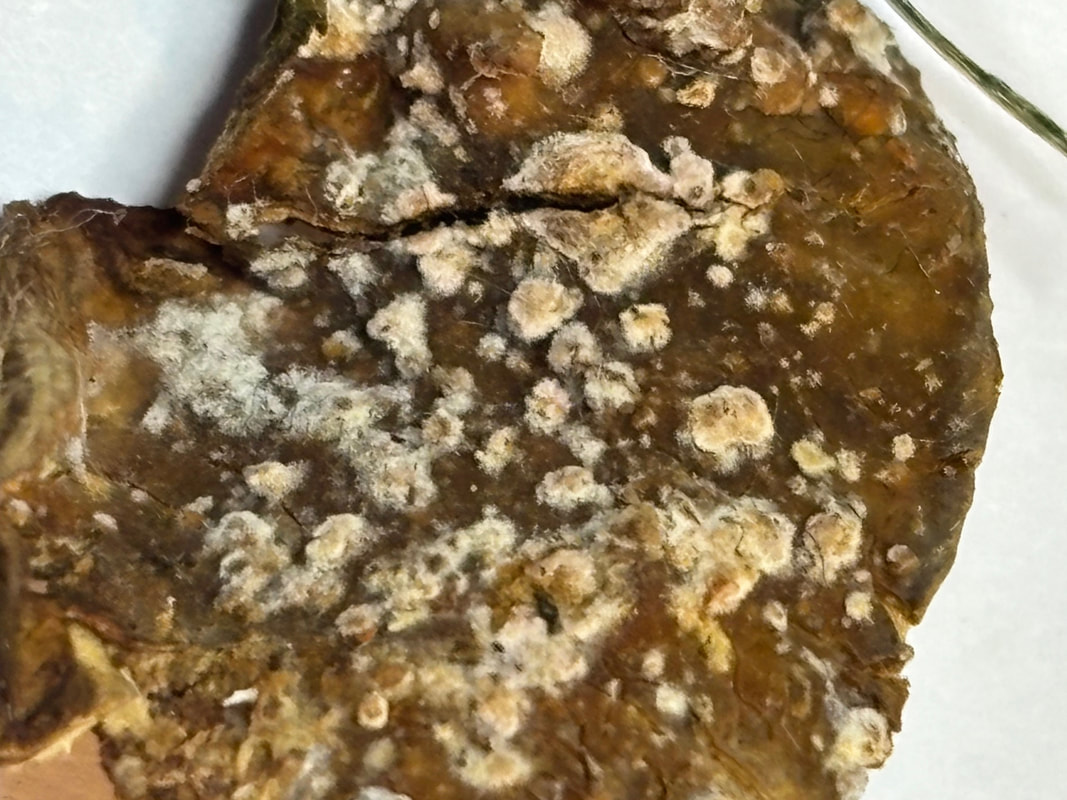
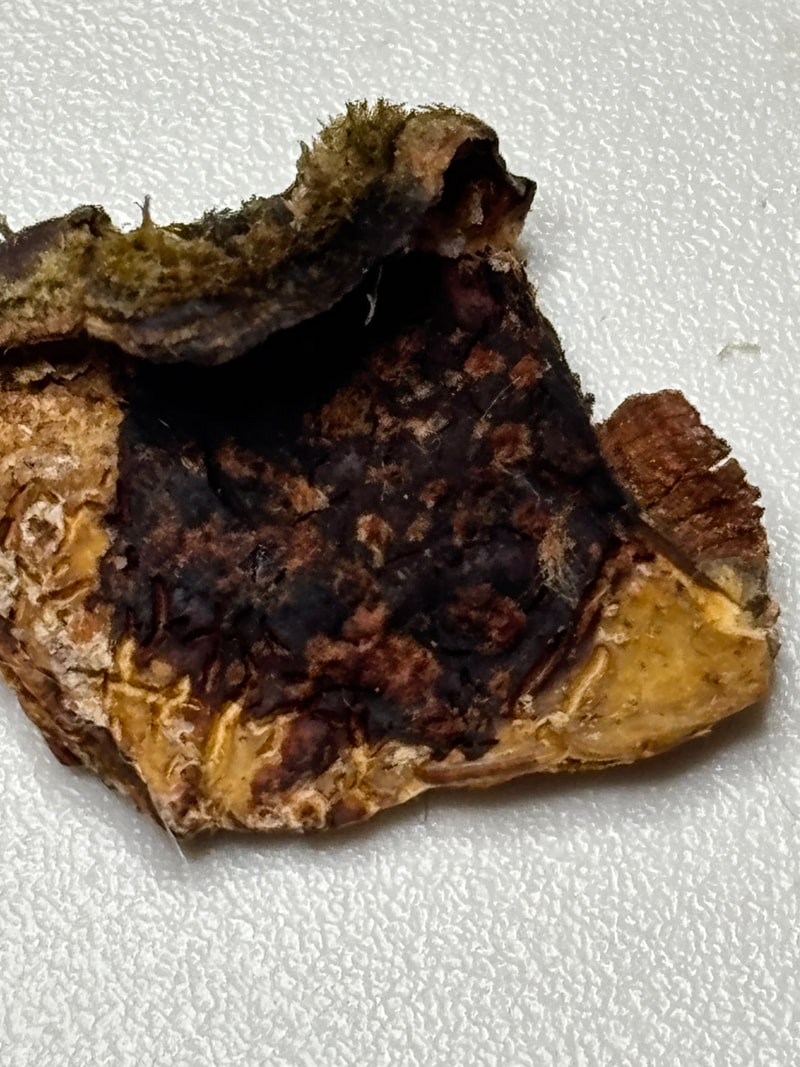
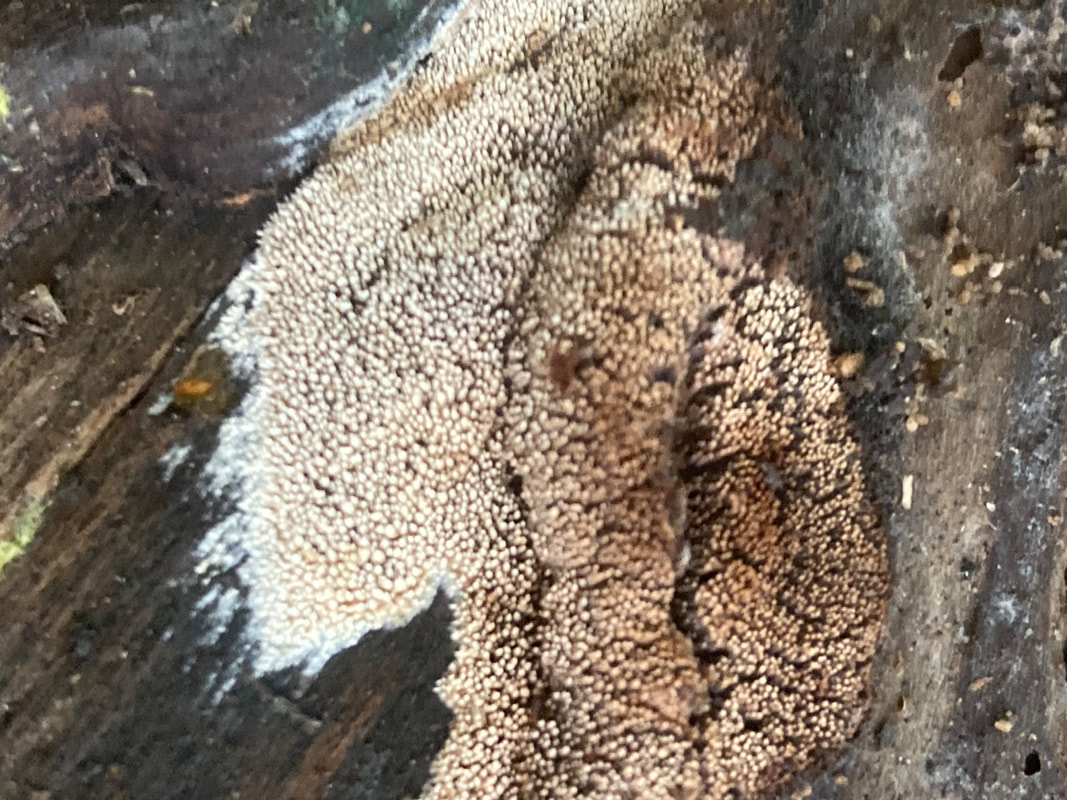
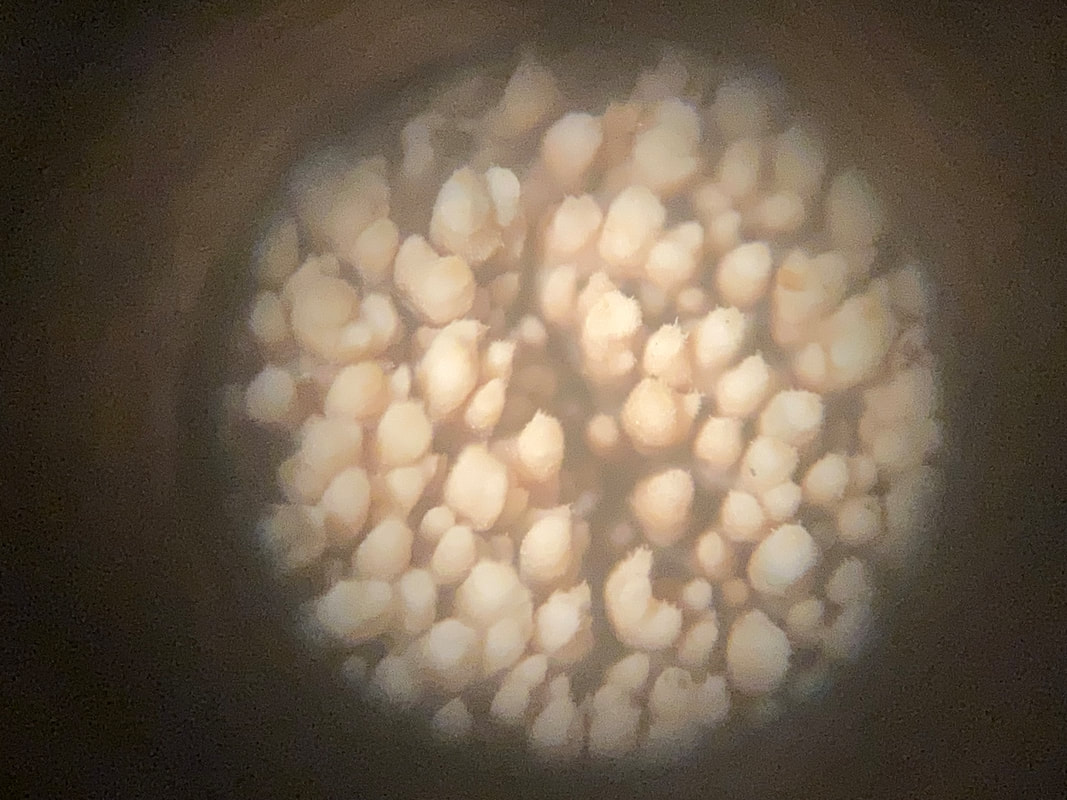
1. Crust fungi are mostly applied to the wood surface (resupinate) presenting a variety of colours and textures. They bear spores in fours on specialised hyphal buddings (basidia), naming then takes a while as it's necessary to get a spore print by laying the shaved-off fungus on a slide and waiting a good 24 hours. They are often at their best in winter taking advantage of continued wet, also it's easier to search through the habitat when there's less vegetation like nettles impeding the intrepid mycologist!
First Foray 16 October 2025
After several hours in Watts Wood, South Wood and Coop Wood, quite a list was being developed and can be found here. As Tim B observes "New-ish plantings can show unusual abundance of particular species which is what we saw". In total, 55 species were identified on the Reserve, after a dry summer, maybe even more to be found in a different year!
The photos from Tim D and Colin are shown below with Tim B's notes:
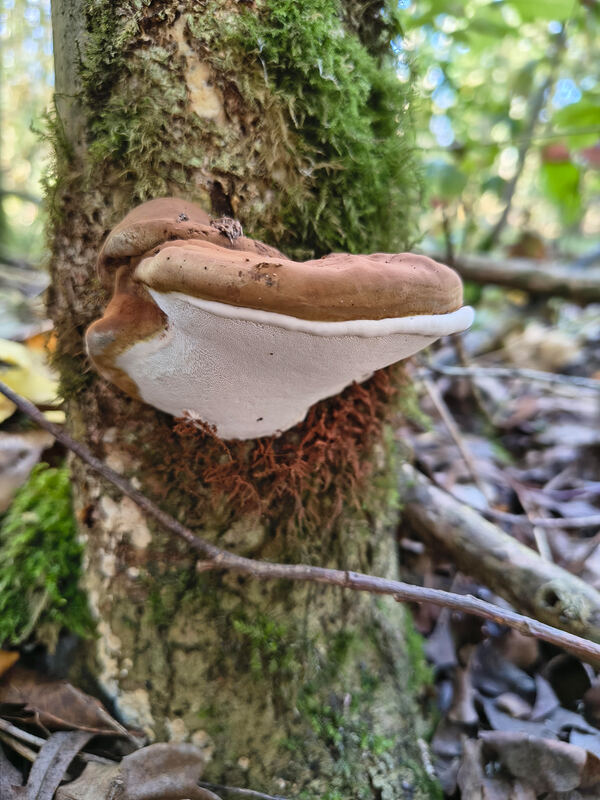
Southern Bracket (Ganoderma australe) quite a common one on various broadleaves often in parks and gardens. Watts Wood. Photo: Tim Dorrington
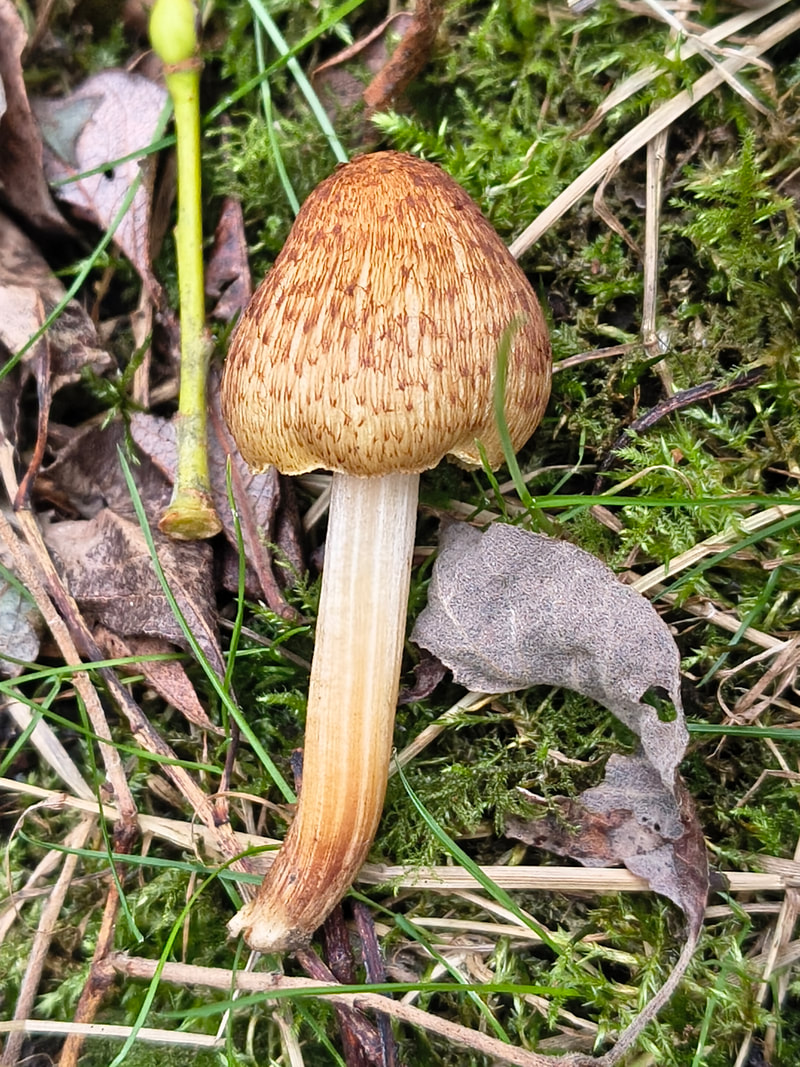
The brown-scaly version of Common Inkcap ( Coprinopsis romagnesiana) found as a small tuft by Tim D we think on buried wood by track thro' South Wood - this is the second Lincolnshire record-it's a recently published segregate. Photo: Tim Dorrington
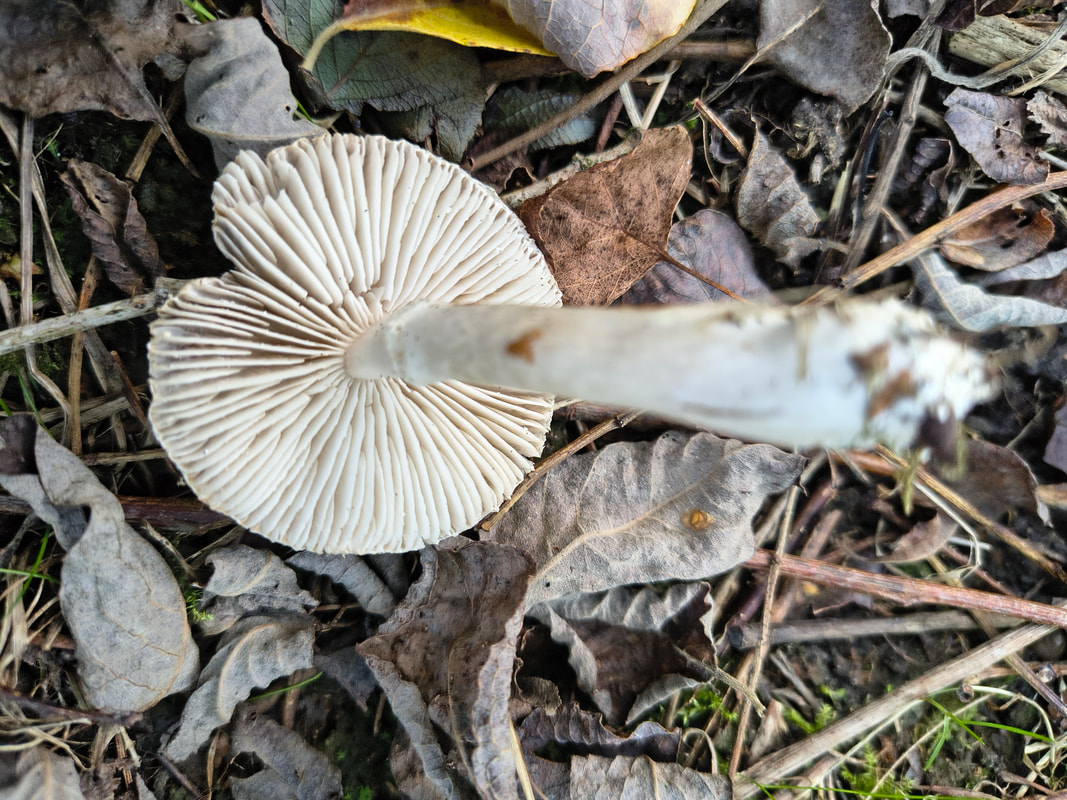
Girdled Knight ( Tricholoma cingulatum) in large numbers under willows in South Wood , associated with willow, can come in quite quick to new plantings, I don't see it that often. Photo: Tim Dorrington
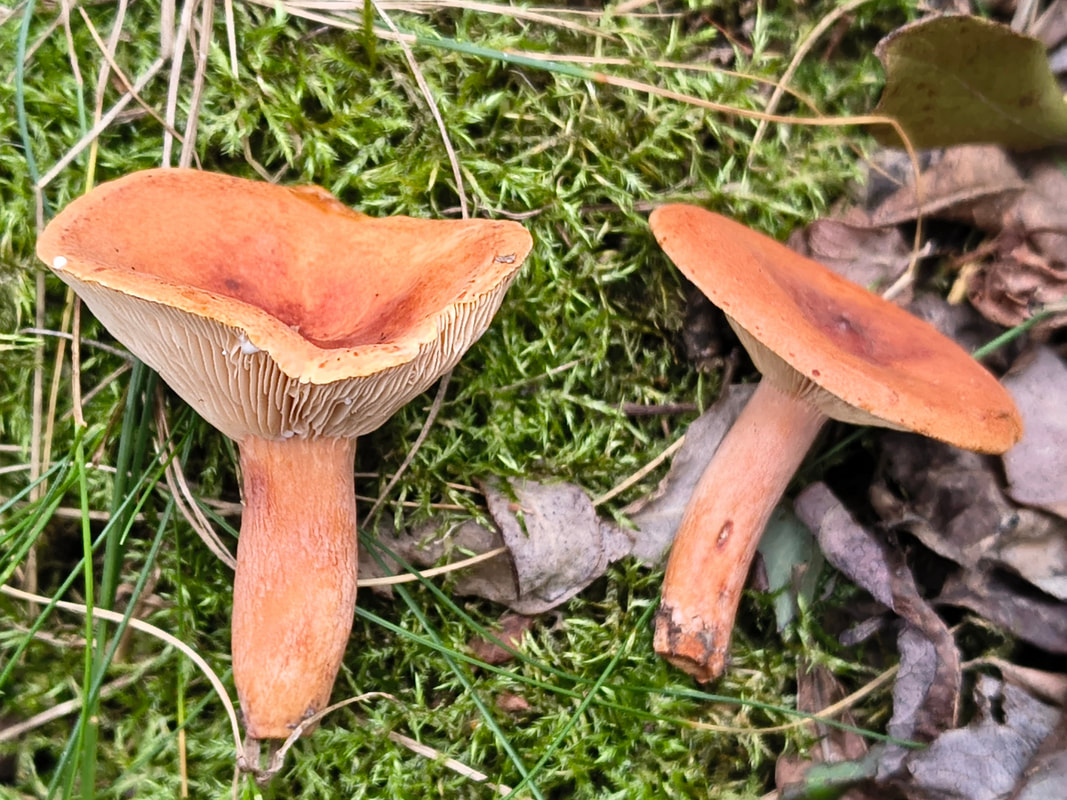
Tawny Milkcap ( Lactarius fulvissimus) fairly common under broadleaves. Photo: Tim Dorrington
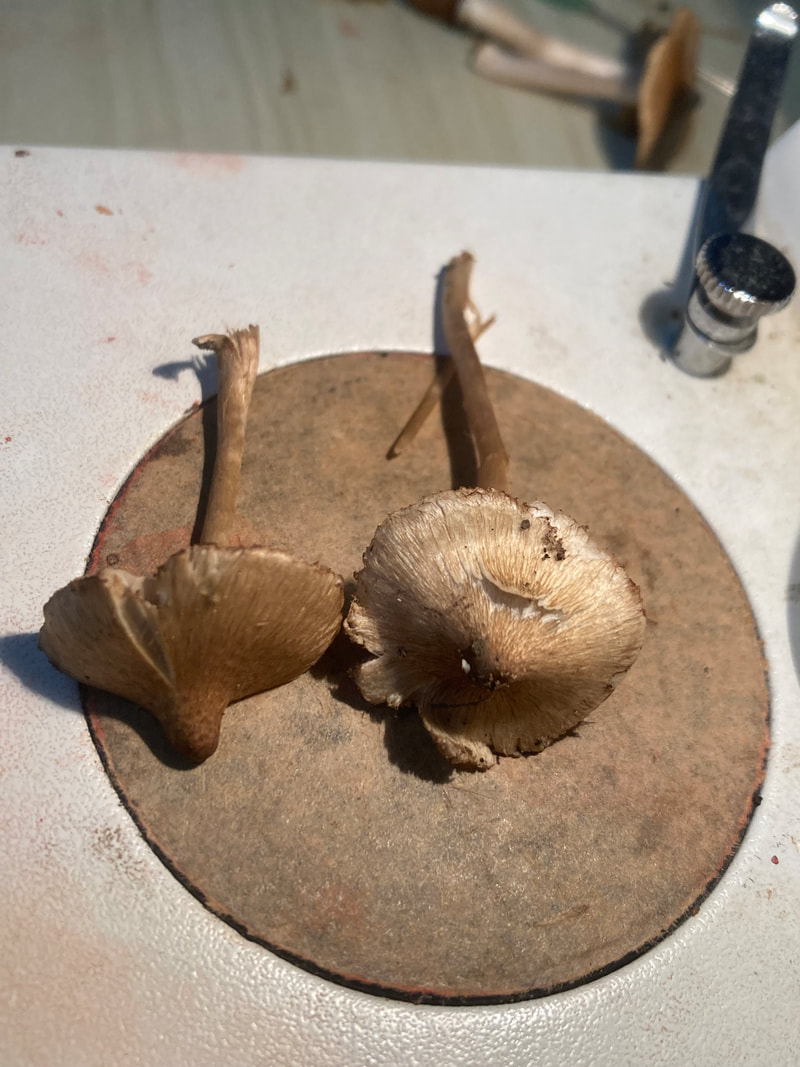
Fibrecap (Inocybe curvipes) common mostly in grassy glades in South Wood with birch/willow, has a slightly scaly cap with a prominent umbo. Photo: Tim Bruning
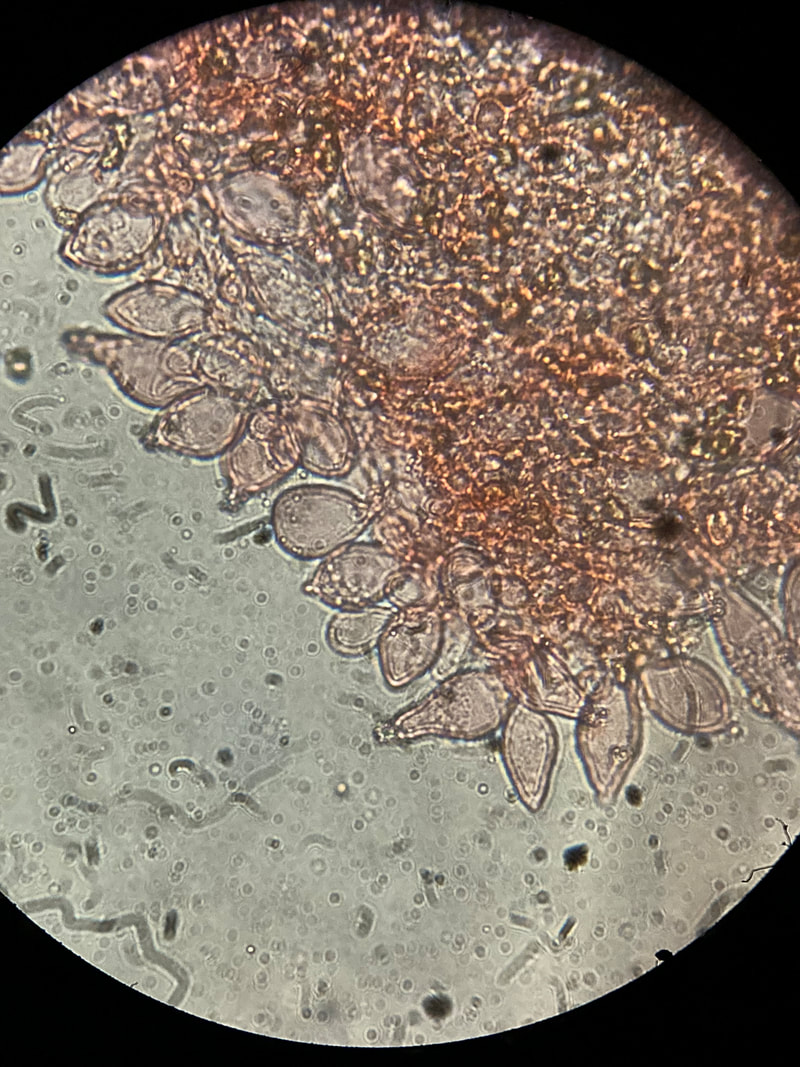
Fibrecap microscopy - end-cells of hyphae on the gill edge (cystidia) swollen with crystals, and starry nodular spores, x600. Photo: Tim Bruning
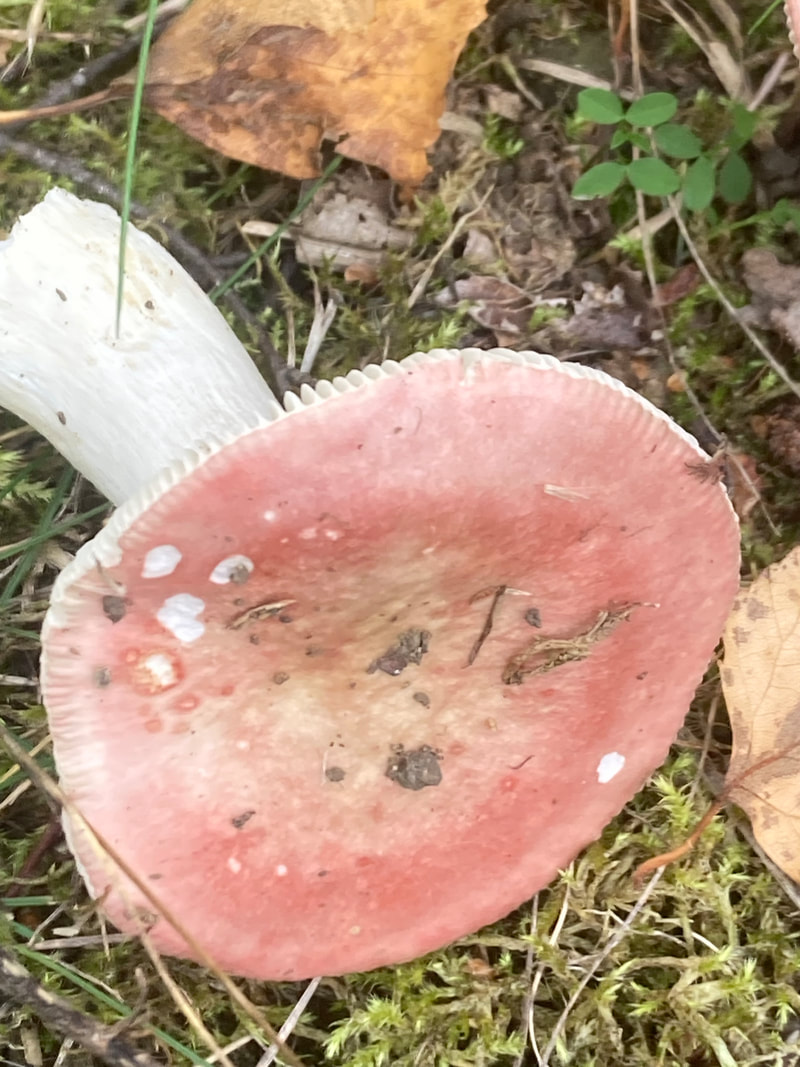
Bleached Brittlegill ( Russula exalbicans) in huge numbers under young birch (? ~ 7 y or so) by lake, photo in situ shows the rose-pink...
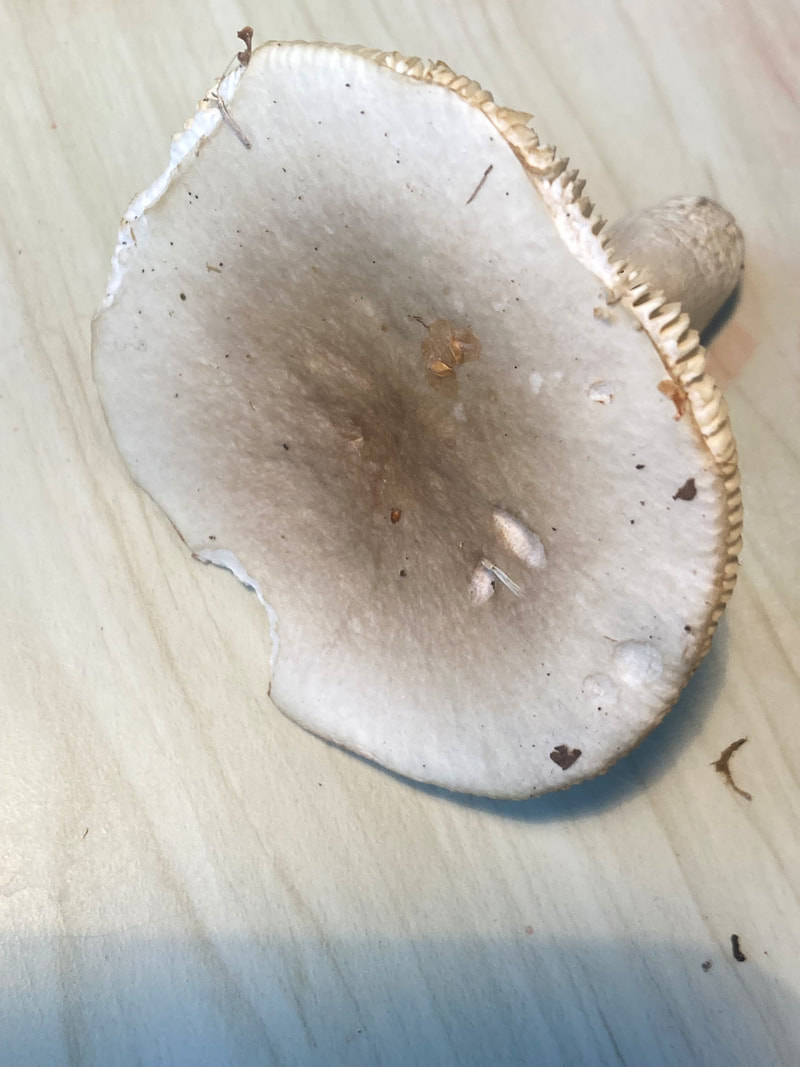
...Bleached bittergill later, washed out to nearly cream
22 October 2019